
Last Updated: November 21, 2026
Quick Summary
Beach calm is the settled, unhurried feeling the shore gives you, and you can keep it wherever you are. Build a short routine around the sights, sounds, and scents that make the coast restful. Even a single thought of the place you love can make a stressful day feel lighter.
- Pick one beach sensation before you go, such as the sound of the surf or the smell of salt air.
- Stand still at the water's edge for one minute and breathe with the waves, inhaling as a wave rolls in and exhaling as it pulls back.
- Repeat five slow breaths with the waves when you arrive, letting your attention soften toward the horizon.
- Add a couple of drops of beach essential oil to lava beads to enjoy the salty air scent for days.
- When you cannot reach the beach, run the indoor version: three slow breaths, a minute of picturing the shore, and wave sounds.
Table of Contents
- What Beach Calm Really Means
- What Makes Beaches Calming in the First Place
- A Step-by-Step Routine for Holding Beach Calm
- Keeping the Beach Scent With You Using Beach-Inspired Aromatherapy
- Bringing Your Beach Calm Into Your Next Work Week
- Frequently Asked Questions
What Beach Calm Really Means
Beach calm is the settled, unhurried feeling you get when you think about the shore.
Here's the good news: beach calm is something you can hold onto. That's why this guide shows you how to maintain beach calm wherever you are, from a busy office to a quiet kitchen table.
Beach calm is a state of mind built from the sights, sounds, and scents that make the coast feel restful. It works best when you bring those details into your everyday routine.
What Makes Beaches Calming in the First Place
Beaches calm people because they offer gentle, repeating sensations. Read more about sensory tools for relaxation to see how other everyday details can support a calm mind. Waves come and go in a steady rhythm. The breeze moves across your skin.
Most people feel the pull of the shore in a few simple ways:
- Rhythm: Waves roll in and out, much like a slow, steady breath.
- Warmth: Sun on your shoulders feels comforting and easy.
- Space: Wide, open views help your attention soften.
Knowing these details helps you choose what to bring home. You can pick the sensations that matter most to you and keep them close.
A Step-by-Step Routine for Holding Beach Calm
A routine works best when it follows the shape of an actual beach day: preparing before you go, settling in once you arrive, and carrying the feeling home. The steps below are short enough for a lunch break and flexible enough for a full afternoon on the sand.

Before You Go: Set the Intention
Pick one sensation you want to notice at the beach, the sound of the surf, the warmth of the sand, or the smell of salt air. Naming it ahead of time gives your attention a gentle place to land.
- Check the conditions. Look at the tide chart and surf report for your beach. A calm, low-surf window is easier to relax into than a high-surf afternoon.
- Pack for comfort. Bring water, a hat, sunscreen, and a light layer for the breeze. Physical comfort is the foundation of mental ease.
- Leave the phone in the bag for the first ten minutes. A short screen-free arrival helps your senses adjust to the shore.
Time needed: 5 minutes the night before.
When You Arrive: Settle Your Senses
Walk to the water's edge and stand still for one minute. Let your feet feel the sand and listen to the waves before you set up your spot. This small pause signals to your body that the pace has changed.
- Breathe with the waves. Inhale as a wave rolls in, exhale as it pulls back. Repeat five times.
- Scan the horizon. Let your eyes rest on the line where sky meets water. Wide views give busy attention a place to soften.
- Notice three sounds. Name them silently, gulls, surf, voices, and let each one pass without holding on.
Time needed: 3 to 5 minutes.
During Your Visit: Protect the Calm
Relaxation at the beach is easier when you stay aware of the environment. A few practical habits keep the experience safe and settled.
- Swim near a lifeguard and between the flags. Rip currents are the main hazard on surf beaches, and swimming parallel to the shore is the standard escape if you feel pulled.
- Drink water before you feel thirsty. Sun and salt air dehydrate quietly, and mild dehydration can feel like restlessness.
- Take shade breaks every hour. A few minutes under an umbrella or hat keeps heat from building into irritability.
Watch out: If the beach is crowded or noisy, move a short walk down the shore rather than enduring the bustle, a quieter stretch of sand does more for calm than willpower.
After the Beach: Carry It Home
Before you leave, take one last slow breath and picture the scene you want to remember. That mental snapshot becomes the anchor you return to on a busy day.
- Rinse off salt and sand to keep skin comfortable.
- Write down one detail from the day, the color of the water, a sound, a smell, so the memory stays vivid.
- Recreate one sensation at home. A wave recording, a shell on the desk, or a beach-scented bracelet can bring the shore back in seconds.
Time needed: 5 minutes.
A Short Version for Busy Days
When you cannot get to the beach, run the indoor version: three slow breaths, one minute of picturing the shore, and a few minutes of wave sounds.
The routine follows a beach day in three stages, with the time each stage needs.
| Stage | What to do | Time needed |
|---|---|---|
| Before you go | Pick one sensation, check conditions, pack for comfort | 5 minutes the night before |
| When you arrive | Stand still, breathe with the waves, scan the horizon | 3 to 5 minutes |
| During your visit | Swim between the flags, drink water, take shade breaks | Shade break every hour |
| After the beach | Rinse off, write down one detail, recreate one sensation | 5 minutes |
| Busy days at home | Three slow breaths, picture the shore, play wave sounds | A few minutes |
Keeping the Beach Scent With You Using Beach-Inspired Aromatherapy
Scent can be a gentle way to bring the shore to you. A familiar smell may bring a beach memory to mind.
Our beach-scented aromatherapy bracelets are made for exactly this. You can pick up the Beach Essential & Fragrance Oil Blend to refresh your lava beads whenever you need a lift.
For a wearable option, browse the Grey Map Jasper Beach Scented Aromatherapy Bracelet and keep the beach close all day.
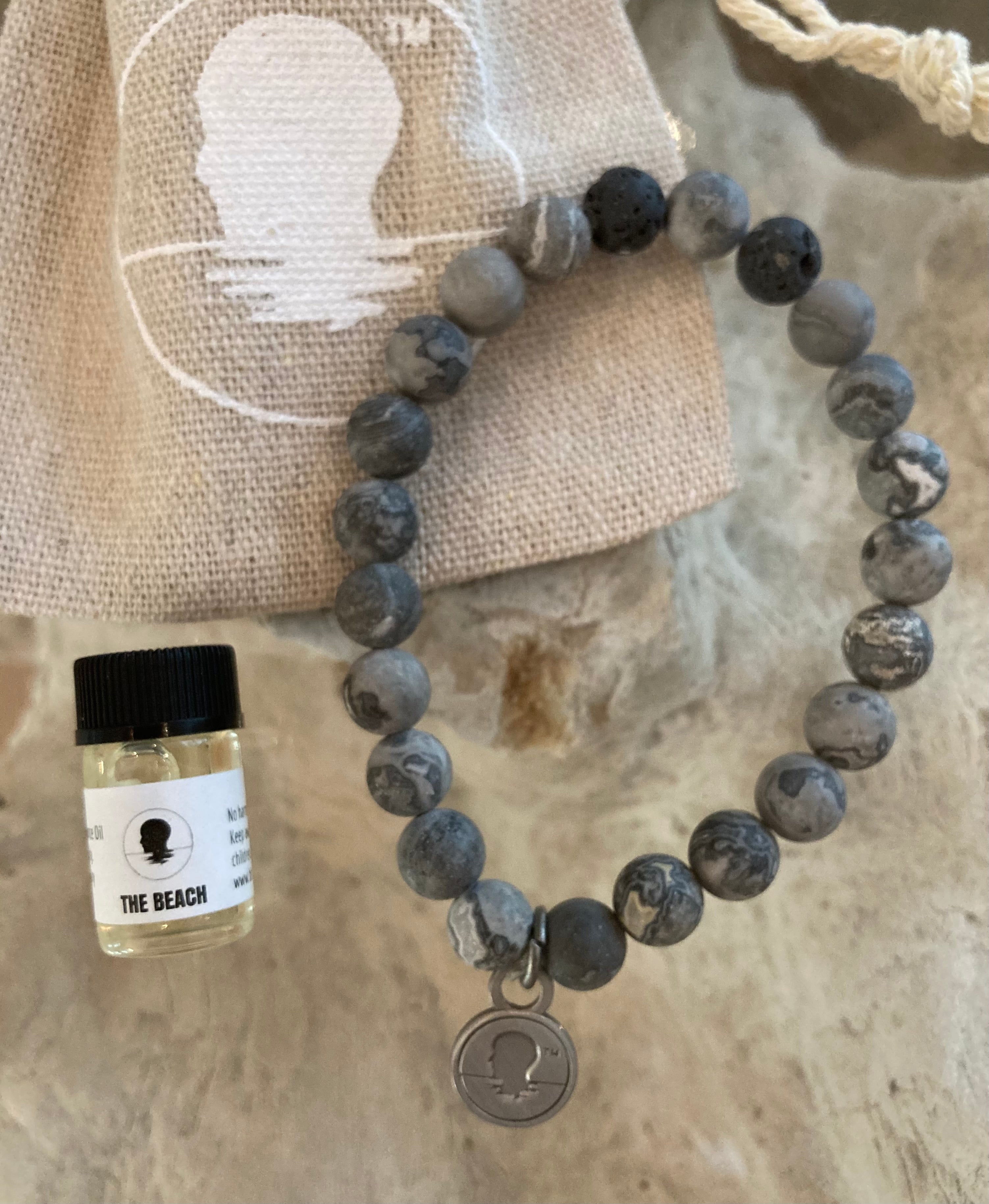
Remember that the oil is made for use on aromatherapy bracelets only and should be kept away from children and pets.
Bringing Your Beach Calm Into Your Next Work Week
The goal is to build small, repeatable cues into your workday so the shore is never more than a thought away.
Build a Two-Minute Morning Anchor
Before you open email, spend two minutes on a beach memory. Close your eyes, picture the water, and take three slow breaths timed to the waves you remember.
Use Transitions as Reminders
Attach the beach mindset to things you already do:
- Before each meeting, take one slow breath and picture the horizon.
- At lunch, step outside or look at a photo of the shore for sixty seconds.
- At the end of the day, name one thing that went well, the way you would name a shell you found on the sand.
Keep a Sensory Cue Within Reach
Scent and touch are fast routes back to a beach memory. For a daily visual reminder, add a Sunny Day Beachhead State Of Mind Decal to your workspace.
Watch out: Avoid turning the cue into another task. If you notice yourself checking the bracelet or the shell out of habit rather than pausing to breathe, set it down and return to it later, the pause is what matters, not the object.
Protect the Edges of Your Day
Beach calm survives best when the start and end of the day are unhurried. A short walk, a few minutes of wave sounds while you make coffee, or a quiet moment on the balcony can frame the workday the way the shoreline frames the sea.
Plan the Next Beach Day
Having a future beach visit on the calendar gives the mindset somewhere to go. When you're ready to pack, you can browse the Honu Sea Turtle Weekender Bag for your next getaway. Even a tentative weekend plan keeps the shore present in your week and makes the next routine easier to start. When the week feels long, return to the short version: breathe, picture the shore, and let your head take you to a place you love.

Frequently Asked Questions
What makes beaches calming?
Beaches combine several sensory cues that tend to slow breathing and settle attention: the steady rhythm of waves, the broad horizon that lets the eyes rest, warm sunlight, and the cool salt air. Because these cues are easy to notice without effort, they pull attention into the present moment. You can recreate part of that effect at home or at work by focusing on one cue at a time, such as slowing your exhale to match the rhythm of waves in a recording or picturing the horizon while you breathe.
Can imagining a favorite beach help me feel calmer?
Many people find that picturing a favorite beach in detail helps them slow down. A short beach visualization exercise asks you to recall the warmth of the sand, the sound of the surf, and the smell of the air. Spending a minute or two on this while you breathe slowly gives your mind a calm place to return to during a busy day. Keep the picture simple and familiar so it is easy to call up quickly.
What sounds can help recreate a peaceful beach atmosphere?
Relaxing beach sounds such as gentle surf, soft wave wash, or a steady shoreline breeze are the most common choices. Play them at a low volume while you work or rest, and pick a recording with a slow, even rhythm rather than sudden crashes. Matching your exhale to the wave cycle is a simple way to use the sound actively rather than just having it in the background.
How can I use scent to evoke a relaxing beach memory?
Scent is closely linked to memory, so a familiar beach smell can bring back the feeling of a shoreline quickly. Beach-inspired aromatherapy works this way: a few drops of a beach-scented oil on a bracelet let you smell the salty air through the day. Use the scent as a cue. Each time you notice it, take one slow breath and bring to mind one thing you enjoyed about the beach.
