
Last Updated: November 17, 2026
Quick Summary
The best sensory tools for anxiety are physical objects that use touch, scent, sight, or sound to help your nervous system settle, chosen to match your dominant sensory channel and your setting. Pick one tool per channel that you can use discreetly and consistently, since a simple object you reach for daily beats an expensive gadget you use twice. Sensory tools support self-regulation but do not treat anxiety.
- Scent-based aromatherapy bracelets combine touch and scent in one wearable piece and cost $28.
- Adults often do best with one tool per channel rather than a drawer of novelty items.
- For school, choose silent, small tools a student can use one-handed under a desk.
- Patch-test any scented product before all-day wear and stop if irritation appears.
- Reapply oil sparingly to lava stones rather than soaking them, and replace cracked items.
Table of Contents
- Quick Comparison: Best Sensory Tools for Anxiety
- How to Choose a Sensory Tool That Actually Works for You
- The Best Sensory Tools for Anxiety for Adults
- Fidget Toys for Anxiety at School
- The Best Sensory Tools for Anxiety for Toddlers
- Sensory Tools for Anxiety and Depression
- Safety, Sensory Sensitivities, and Maintenance
- Find a Calming Tool That Fits Your Day
- Frequently Asked Questions
Quick Comparison: Best Sensory Tools for Anxiety
Sensory tools for anxiety are physical objects that use touch, scent, sight, or sound to help your nervous system settle. At BEACH HEADS STATE OF MIND, we build wearable scent-based tools. The best sensory tools for anxiety work when they match your sensory preference, your setting, and how much discretion you need.
Below, we break down what actually helps, what to expect, and how to pick a tool you will keep using after the novelty wears off.
| Tool Type | Sensory Channel | Best For | Discretion Level | Price Range |
|---|---|---|---|---|
| Aromatherapy bracelet | Scent, touch | Desk work, commuting | High | $28 |
| Fidget cube or spinner | Touch | Focus, restlessness | Medium | Low |
| Stress ball or putty | Touch | Tension release | Medium | Low |
| Weighted lap pad | Deep pressure | Home, quiet spaces | Low | Medium |
| Chewable jewelry | Oral input | School, sensory needs | High | Low |
| Scent inhaler | Scent | Quick reset, on-the-go | High | Low |
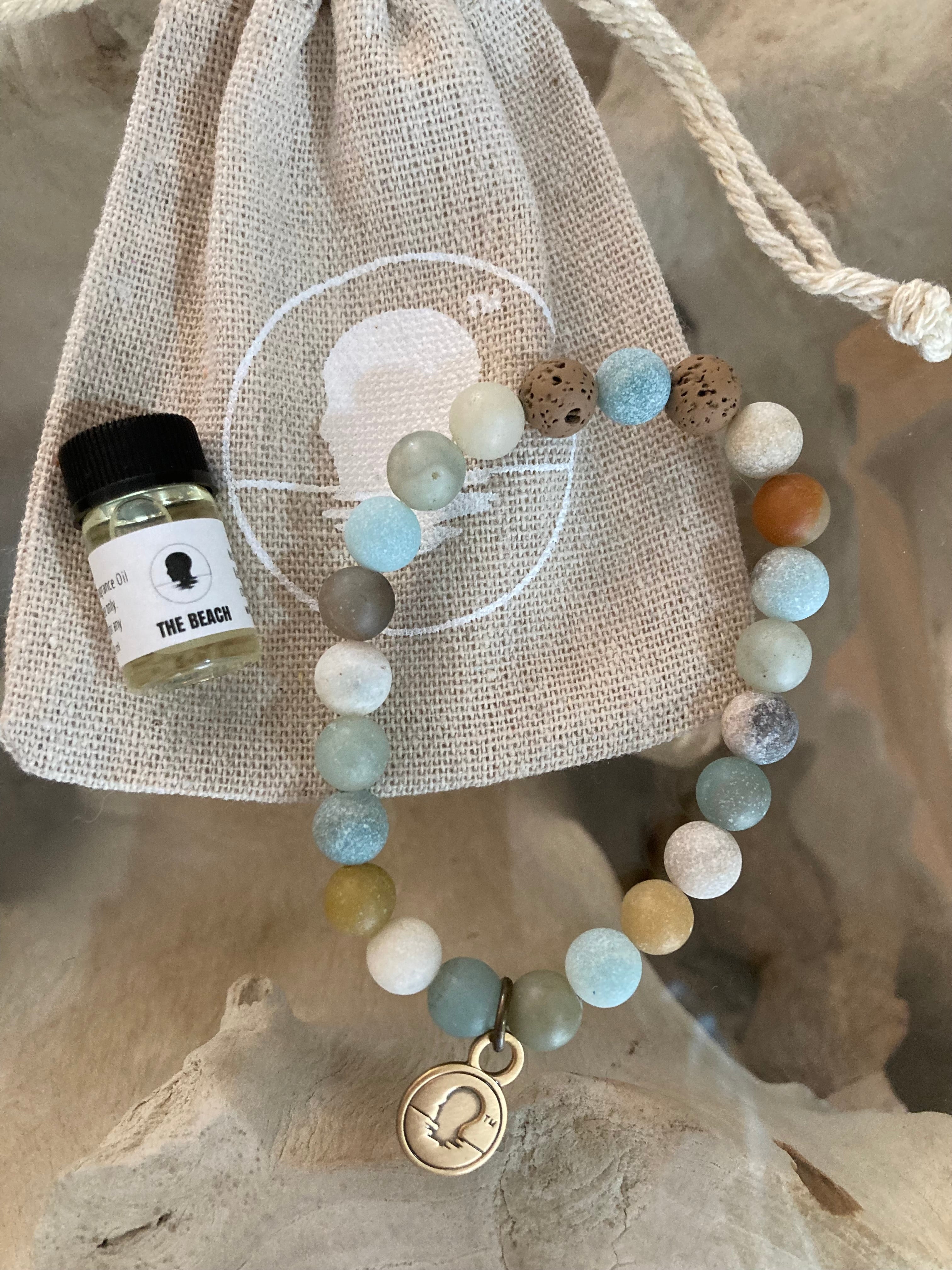
For a concrete example of a scent-based tool you can evaluate against the options above, see the beach scented aromatherapy bracelet in our collection.
How to Choose a Sensory Tool That Actually Works for You
Choosing well comes down to two questions: which sense you respond to most, and what the tool can realistically do for you. Most buyers skip both and end up with a drawer full of fidgets.
Match the Tool to Your Sensory Preference
Start by noticing what already calms you. If a warm shower or a familiar smell settles you faster than anything else, scent is your channel. If your hands need something to do during meetings, tactile input is the answer. People who need oral sensory input often do better with chewable jewelry than with a stress ball.
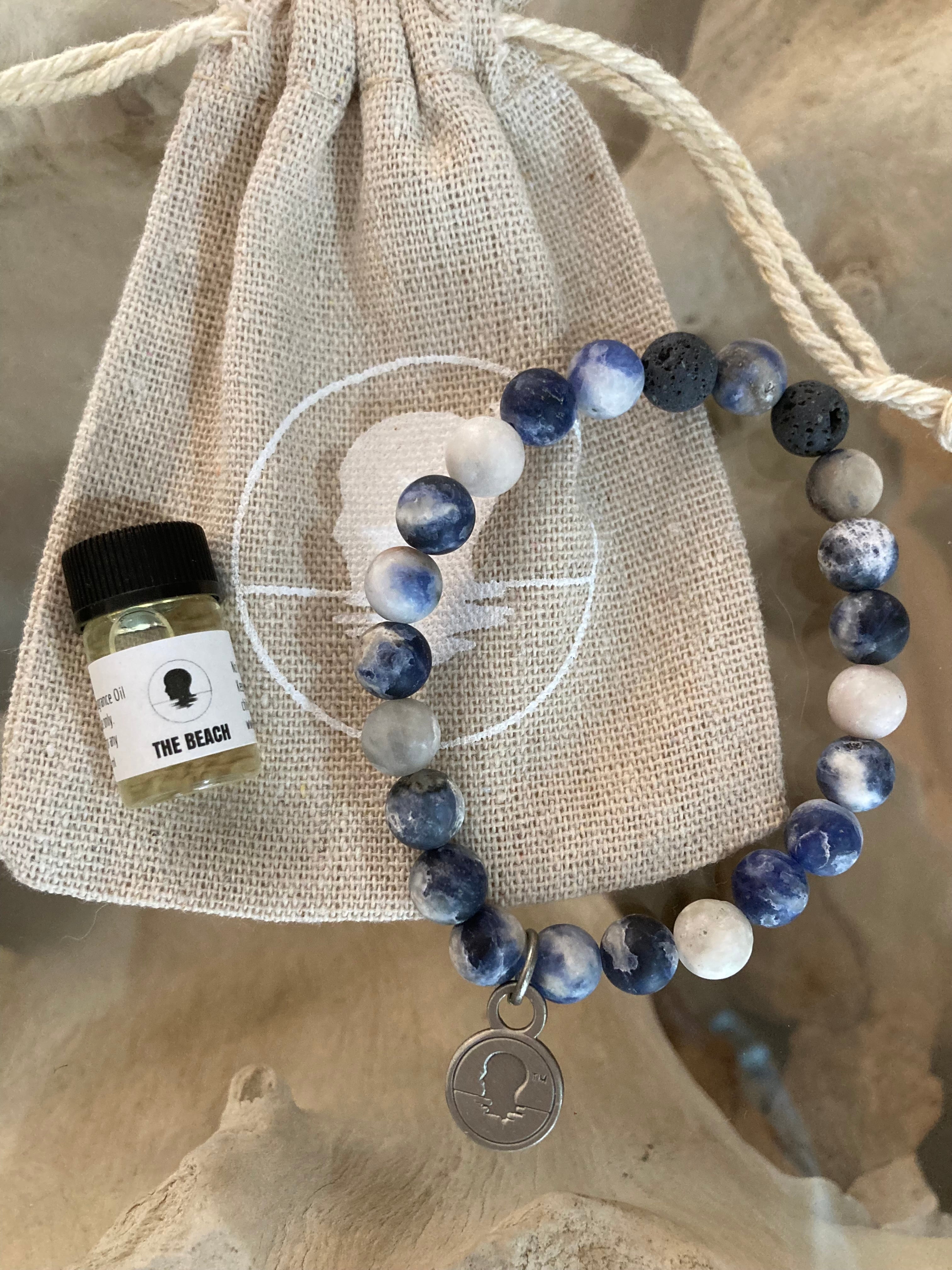
A common mistake is buying the tool that looks most appealing online rather than the one that fits your channel. If you want a wearable option that combines touch and scent, the Tigers Eye beach scented aromatherapy bracelet with your choice of silver or gold charm is a reasonable starting point to test whether a tactile, scented piece suits you.
Set Realistic Expectations About What Tools Can Do
Sensory tools support self-regulation. They do not treat anxiety, and no product should be sold to you as a cure.
What most guides miss is that consistency matters more than the tool itself. A simple object you reach for every day beats an expensive gadget you use twice.
The Best Sensory Tools for Anxiety for Adults
For adults, the best sensory tools for anxiety are the ones you can use without drawing attention and without creating a new problem. Offices, trains, shared apartments, and open-plan kitchens reward tools that sit quietly in your hand or on your wrist, and they punish anything that beeps, clicks, lights up, or smells strong enough for a coworker to notice.
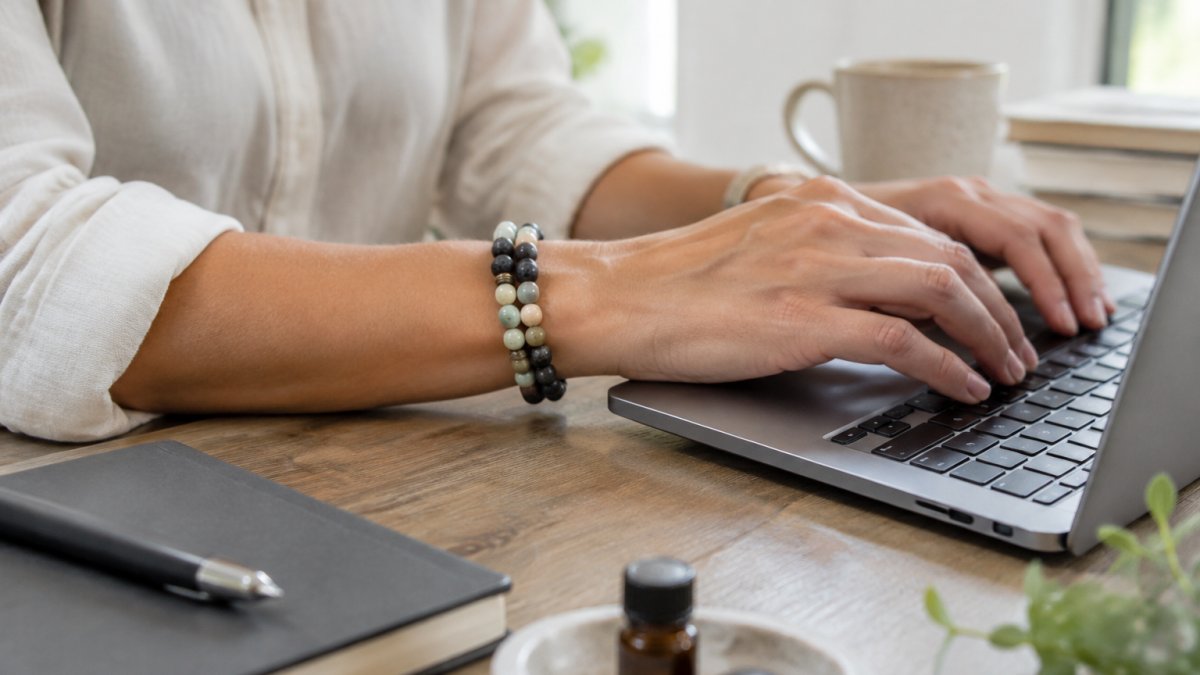
The most useful way to choose is to start with the channel you already respond to, then filter by setting. Adults often do best with one tool per channel rather than a drawer of novelty items, because the tool you reach for automatically is the one that is most likely to help you settle.
If touch is your channel. Fidget cubes, magnetic rings, and smooth worry stones give quiet, repetitive hand movement that many people find easier to sustain through meetings than a spinner. Stress balls and putty release tension through the whole hand and forearm, which suits desk work and phone calls. Weighted lap pads deliver deep pressure and are best kept for home or a closed office, because they are visible and not portable.
If scent is your channel. Aromatherapy bracelets combine touch and scent in one wearable piece. Our bracelets use natural gem and lava stones, and a couple of drops of beach-scented oil on the lava stones carry that salty air scent for days. Each bundle includes a 2ml beach scented oil and a canvas pouch. If you want to top up, the Beach Scent essential fragrance oil blend in a 3ml bottle keeps the scent going. Scent inhalers are a faster, more concentrated reset between tasks, but they are also more noticeable to people nearby.
If oral or movement input is your channel. Chewable jewelry is discreet enough for many adult workplaces, though it is a personal choice and not for everyone. Small movement breaks, a textured ring to roll under a desk, or a pocket-sized textured stone can cover the movement need without a visible gadget.
Best for: adults who want a discreet, wearable tool they can use in public without explanation. Skip if: you are sensitive to fragrance, in which case a tactile-only tool is safer. Watch out: a tool that distracts you from the task is not regulating you; if you find yourself fiddling instead of working, switch to a lower-stimulation option or use it only between tasks.
Set expectations honestly. Sensory tools support self-regulation; they do not treat anxiety, and no product should be sold to you as a cure. Most practitioners frame these items as one part of a broader routine that may include movement, sleep, breathing practice, and professional support where needed. Consistency matters more than the tool itself: a simple object you reach for every day beats an expensive gadget you use twice.
Fidget Toys for Anxiety at School
Fidget toys for anxiety at school work best when they are silent, small, and allowed by the classroom. Teachers tend to accept tools that do not distract neighbours, and students use them more when they are not self-conscious. The practical test is simple: can a student use it in one hand, under a desk, without a sound or a light that pulls other eyes?
Practical picks for students:
- Fidget spinners and cubes for quiet, repetitive motion, kept in a pocket or pencil case rather than on the desk
- Chewable jewelry and chewy tools for oral sensory input, chosen to match the student's age and inspected regularly for wear
- Tangle toys for restless hands during reading and silent work
- Small textured stones or a smooth worry stone that fits in a pocket and makes no noise
- Weighted lap pads or lap cushions for quiet deep pressure during seated work, where the classroom allows it
Match the tool to the setting, not just the student. A silent textured stone suits a test or a library period; a chewable necklace suits a student who needs oral input and can use it without drawing attention; a weighted lap pad suits a student who settles with deep pressure but needs it to stay at their desk. For students who need movement, a resistance band around chair legs or a short movement break often works better than a handheld toy, because it channels the need without a visible object.
Watch out: a tool that makes noise, lights up, or rolls off the desk will get confiscated, and that defeats the purpose. Talk to the teacher or support staff first, agree on when and how the tool is used, and choose something that stays in one hand. A tool that becomes a distraction or a status object among classmates usually stops helping.
Safety and age suitability matter as much as quiet. Avoid small parts and loose beads for younger students, check chewable items for cracks and fraying, and follow the manufacturer's age label. Chewable products are not indestructible, and a worn item should be replaced rather than repaired.
You can read more guidance on sensory needs from the American Occupational Therapy Association, which covers how sensory strategies fit into daily routines.
The Best Sensory Tools for Anxiety for Toddlers
For toddlers, the best sensory tools for anxiety are simple, safe, and supervised. Sensory play is the main route here: textures, shapes, and movement do more for a young child than any single gadget.
Good options for little ones:
- Sensory bins with safe textures such as fabric scraps or large smooth stones
- Soft stress balls sized for small hands
- Weighted toys and blankets for calming deep pressure
- Textured board books for tactile input during quiet time
Safety comes first. Avoid small parts, loose beads, and anything that can be chewed apart. Chewable items should be age-appropriate and inspected regularly for wear.
Sensory Tools for Anxiety and Depression
Sensory tools for anxiety and depression overlap heavily, but the goal shifts. With low mood, the challenge is often engagement rather than overstimulation, so tools that invite gentle activity tend to help more than tools that simply soothe.
Options worth trying:
- Textured and weighted objects that give your hands something to do
- Scent tools that cue a positive memory or place
- Visual and auditory stimulation such as a small lamp or calming playlist
- Tactile pieces you can wear, which keep the input present through the day
A reader looking for a calming, wearable piece tied to mood support may find a grounding option in the Rhodonite beach scented aromatherapy bracelet, which pairs tactile stones with a familiar scent.
These tools sit alongside broader support, not in place of it. If low mood is persistent, speak with a qualified professional.
Safety, Sensory Sensitivities, and Maintenance
Safety and upkeep decide whether a tool stays useful or ends up in a drawer. Two issues matter most: skin and scent sensitivity, and wear over time.
On sensitivities, patch-test any scented product before all-day wear, and stop using it if irritation appears. Some people find strong fragrance overwhelming rather than calming, and that is a real drawback worth respecting. If scent is a trigger for you, choose a tactile-only tool instead.
On maintenance:
- Wipe hard surfaces and stones with a damp cloth
- Reapply oil sparingly to lava stones rather than soaking them
- Inspect cords, clasps, and chewable items for wear
- Replace anything that cracks or frays
For readers who want a low-maintenance wearable that avoids scent and texture triggers entirely, the Sea Turtle multi functional headwear is a practical alternative.
For general consumer product safety guidance, see the U.S. Consumer Product Safety Commission.
Find a Calming Tool That Fits Your Day
The right sensory tool is the one you actually reach for. Start with your dominant sensory channel, keep your setting in mind, and expect support rather than a cure.
At BEACH HEADS STATE OF MIND, we designed our aromatherapy bracelets for exactly this: carrying a bit of coastal calm into a landlocked workday. Each bracelet pairs natural gem and lava stones with beach-scented oil, ships in two to three days, and comes with a canvas pouch. Reapply a couple of drops whenever you need the reset.
Your desk does not have to feel like a desk. Browse our aromatherapy bracelets, pick a stone that suits you, and keep that salty air scent within reach all week. Get started with BEACH HEADS STATE OF MIND and bring a little shoreline into your routine.
Frequently Asked Questions
What sensory tools can help with anxiety?
The most common sensory tools for anxiety work through touch, smell, or movement. Tactile options include fidget spinners, cubes, stress balls, putty, and magnetic rings. Aromatherapy bracelets deliver scent through lava stones, which gives a discreet option for the office. Weighted items and chewable jewelry serve other sensory needs. The tool that helps most is the one that matches your sensory preference and the setting you are in, so try a few categories before committing to one.
Are sensory tools helpful for anxiety and depression?
Sensory tools for anxiety and depression are best treated as a comfort aid, not a treatment. They can give your hands or senses somewhere to settle during a stressful moment, and the routine of reaching for one can act as a calming cue. They do not replace therapy, medication, or professional support. If low mood is persistent, talk to a doctor or therapist, and use tools as one small part of a broader plan.
Can fidget toys help with anxiety at school?
Fidget toys for anxiety at school work best when they are quiet and do not distract classmates. A putty kept in a pocket, a smooth stone, or a small tangle can give a student something to do with their hands during a test or a long lesson. Check the school's rules first, since some classrooms restrict toys. Tools that make noise or draw attention usually end up causing more stress than they relieve.
How do I choose a sensory tool that works for me?
Start by noticing which sense calms you fastest. If smell settles you, an aromatherapy bracelet with a couple of drops of beach-scented oil on its lava stones is a low-profile option. If your hands need to move, try a fidget cube or putty. If you need pressure, look at weighted items. Then match the tool to your setting: a discreet bracelet suits an office, while a larger fidget may be better at home. Give each option a week before judging it.
